
Some Questions from Students before Exam 1, October 1, 2015
I’ve had quite a few students drop in for office hours and another bunch have emailed me questions.
Q: Can you further clarify what chemical score is and how your derive it. Specifically can you explain the practice question (#18) on the exam practice test. Why is is about 70% as good as egg protein?
Answer: Thank you for the questions: I don’t have the practice exam in front of me but I think the full answer will help: The chemical score is a method that uses the amino acid profile of a test protein to predict whether it is high quality protein (support maximal growth in children for example). It is one of many methods (I can think of 5 or 6). You derive the chemical score by knowing what the amino acid composition of the test protein is. You take the essential amino acid in lowest relative amount in the test protein and compare it to that same amino acid in egg protein (the highest quality protein).
Test protein (ex: Algal protein) = tryptophan is 3 grams/100 grams protein
Egg protein = tryptophan is 5 grams/100 grams protein
Chemical score is 3/5 x100 = 60%; The algal protein is 60% as good as egg protein!
A good thing about chemical score – it demonstrates that the protein requirement is really a requirement for essential amino acids. And it is simple, I think.
A bad thing – chemical score doesn’t account for other factors like digestibility!
Q: Also why is fructose digested differently (diffusion) than glucose and galactose?
Answer: You mean absorbed differently! I don’t know why! Sorry! It is one of those things!
Q: “I have a general question about the exam. I have been reviewing the powerpoint presentations and trying to look over the textbook since Monday and I still feel overwhelmed with the amount of information. I am following the review guide but I realize there is a lot of additional information in the book and slides not mentioned in the review guide. I am not a science major and all this information is new for me as I have not taken a science related class in years. Do you recommend we mainly use the review as a guide to prepare and study the other info on the slides in less detail? Grasping everything seems almost impossible but yet I don’t want to miss out on important concepts for the exam. Thank you.”
Answer: Thank you for your question! I have received this same question from many students. The best way to study is to print out the study guide and go through the Powerpoint slides and cross reference the information you see on the slides with the study guide. I did say a few times that you should read the book but do not study all the terms that are defined. You do not have to know structures beyond the fact that polysaccharides are long chains of glucose. And proteins are chains of amino acids. You do not have to regurgitate the diagrams (except for the Progression to Type 2 diabetes, for which there is an example in the practice exams Folder). You should try to get the basic messages from the diagrams. Good luck!
Q: Is the RDA for protein the same as the protein requirement? I know the RDA for protein is 0.8 grams of protein per kg body weight.
Answer: This is explained in the PowerPoint slide that gives the method how they went from the EAR for protein to the RDA for protein. The protein requirement is an average, and the RDA is for 98% of all healthy people–so they are not the same!
Class on Tuesday, September 29, 2015
Questions from the Class:
What are the ULs for vitamin D and selenium? The ULs for vitamin D and selenium are both about 7 times the RDA. This can be seen from the tables in the front cover of the 3rd edition of the text.
Why are fat and gas similar?
Fat and gasoline are both medium to long chain hydrocarbons-long chains of carbons with hydrogens attached – only difference is that fatty acids have a carboxyl group at one end. Makes all the difference in the world- you can drink vegetable oils with fatty acids attached to a glycerol backbone. I would not drink gasoline-it will kill you. Both can be used for fuel with the correct engines.
How much glycogen is stored in the body?
There are about 2000 Kcal of glycogen stored in muscle and about 500 to 600 Kcal stored in liver – so a total of about 2500 Kcal in whole body- depends upon the size of the person.
Where is the Vitamin C balance study? The Vitamin C balance study was described in an early lecture: 09-04-McGuire-3rd Ed Ch2 2015. I also put it on the howtocureobesity.com website.
How were UL values determined? The ULs are determined by a committee of experts who review toxicity studies and make a best guess what is a toxic amount to consume on a daily basis. Some vitamins do not have a UL or it is very high. Others like Vitamin A, D and E have ULs because there are well known examples of over consumption and it is apparent at what level toxicity is seen. Because milk is supplemented with vitamin D, there are examples where the dairy put 100x more vitamin D in the milk and people who drank it developed toxicity – in this case hypercalcemia in blood and calcification of soft tissues including arteries. Also, I have observed students in Nutrition and Health losing hair with an intake of 10,000 IU of vitamin D per day. Obviously, we can’t feed toxic amounts of vitamins and minerals to people to see where toxicity occurs.
A question concerning the dietary assignment:
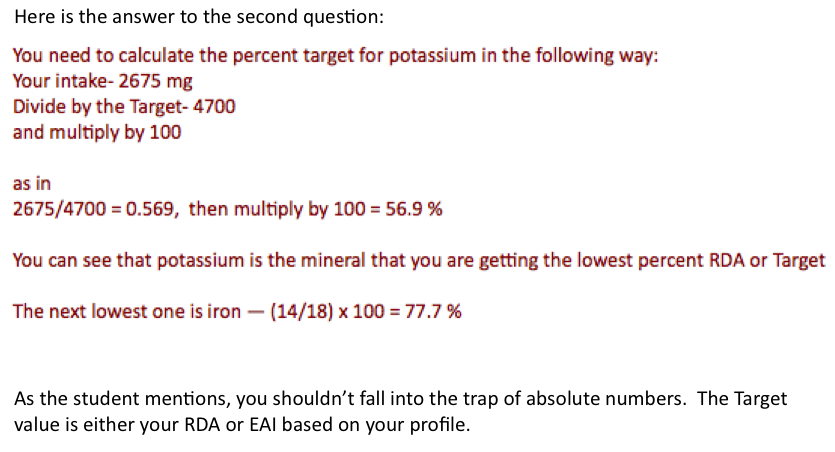
I am working on the dietary analysis, and I am confused on how we are supposed to calculate the greatest and lowest percent RDA for vitamin and minerals.
Answer: The target on the Nutrients report is your RDA or EAR. If you put your information in the profile correctly these should be correct for you.
Then you divide your actual intake from the diet by the target and you have the % RDA. Is it under 100% or above 100%? The greatest or lowest percents are obtained by comparing all of them!





Questions Concerning the Dietary Assignment, September 23, 2015
I received these great questions concerning the dietary assignment. The answers are below.
“Hello Professor! I am just working on the Dietary Assignment and I had a couple of questions:
1) So when you say something needs to be “on one side of one page,” you mean that you want it to be a single sheet of paper, one sided? I am confused because I thought you meant that on one side you wanted for an example, the excel sheet and on the other side you want something else such as the nutritional report which would total to be one page since it is double sided
2) Additionally to confirm, you want a meal summary report, a nutrient report, a hand written food activity record and the typed questions? And all this should be on its own sheet of paper, only front sided?
3) Lastly, for the hand written food activity record, it will contain the same meals as the ones entered on into the website, correct?
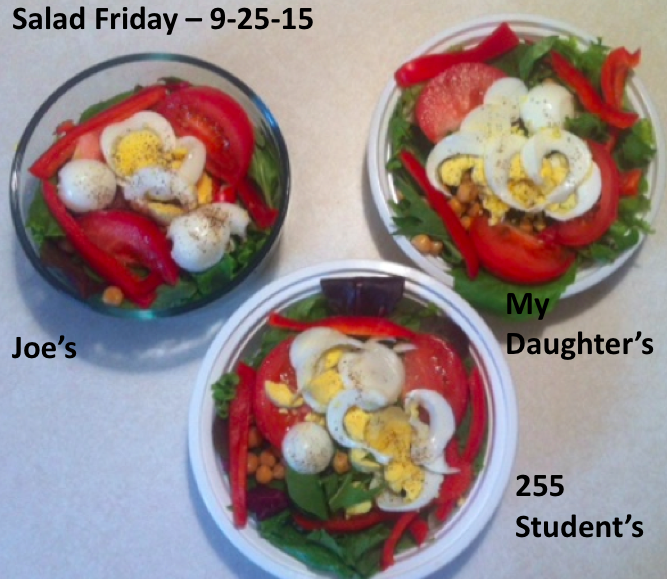
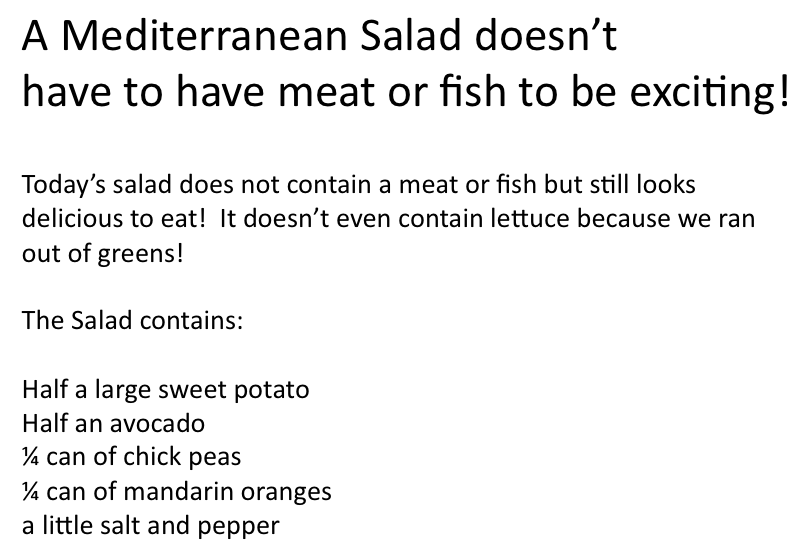
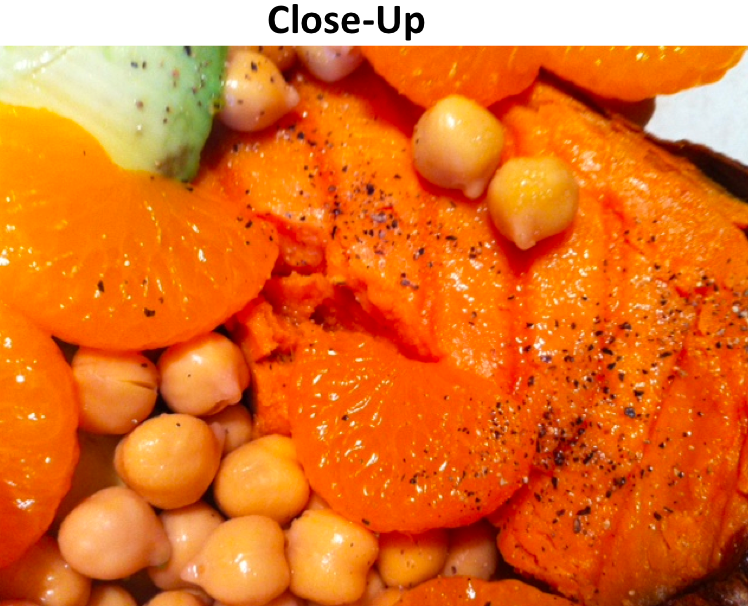
Sorry for all these confusing questions, just wanted to clarify! Hope you have a great week and I will see you Friday. Looking forward to your Mediterranean salad give-away.”
Answers:
Hi! These are great questions. Your #2 below is absolutely correct – you just need those 4 things for the assignment.
The only item that specifically needs to be on one side of one sheet is the Nutrients report. Most people have no trouble with this. In some cases people have taped the nutrient report on one side and that is OK. If the paper is a little big you can fold over the paper. The reason for having it on one side is that it makes it much easier for us to grade. Also, it is easier for you to get the whole picture concerning your dietary intake. Make sure every nutrient is printed out!
The hand written diet record should match the meal summary sheet. It is a little difficult to input the data for every single item and you have to make sure something you wrote down made it into the program. After all, you want to get a correct picture of your diet! So check you meal summery sheet with the diary. If you forgot something go back and edit the input.
Thanks for your questions! Joe Dixon
More on Glucose and Diabetes, September 23, 2015
Last time I gave more information on glucose transporters in order to answer two questions that were asked in class. There was another question that was asked by a student that I couldn’t think of the answer right away. The question was, “Why does the intestinal brush border glucose transporter requires sodium as a co-transporter?” This is a why question, and I’ll do my best to answer it. We already know that the sodium gradient provides energy for the transport of glucose into the enterocyte. There is very little sodium in the cytoplasm of the enterocyte, and so the flow of sodium ions into the enterocyte flows from a high concentration in the lumen to a very low concentration inside the enterocyte. But why is glucose transport linked to sodium transport in the small intestine and no where else in the body?
Answer: This answer requires imagination. We will never be able to go back in time and observe if the following is exactly the reason. When all cells were unicellular organisms, they most likely existed in the ocean, which is high in sea salt (sodium chloride). Therefore, when glucose transporters were first developing, they used the high salt in seawater to flow down a concentration gradient from high to low sodium. Then these first unicellular cells linked up together to become an early intestine, and it turned out that using the sodium gradient for energy was still a good strategy. But then when multi-tissue organisms began to develop, it was no longer feasible to use the sodium gradient for efficient energy, so glucose transporters lost this part of this mechanism and developed other strategies to bring glucose into cells. All of this changing was done under the mechanism of natural selection.
Another question asked by a student in class related to how long a Type I diabetic patient could live without insulin injections. In class I said a month, but the answer depends upon how many residual Beta cells are still working in the pancreas of the patient. I was thinking of the Type 1 diabetic who had recently lost most of their beta cells and was getting to the point where they make very little insulin. If this condition is allowed to proceed they will in fact die with the time being based upon how long the last Beta cells hold out. But if the patient is already in End Stage Type 1 Diabetes and has absolutely no insulin produced, they will have complications on a much quicker time frame and require insulin injections every day or else they will feel very ill and will die quickly.
A comparison of Type 1 Diabetes and Type 2 Diabetes is shown below:

Class on Tuesday, September 22, 2015
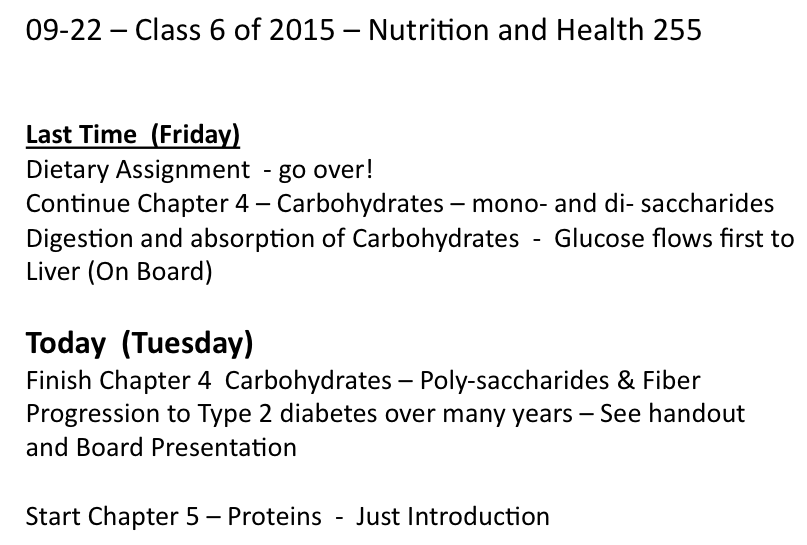
Last class I discussed glucose transport into the enterocyte and how it required sodium co-transport. Then later on I was talking about glucose transport into muscle and how it was regulated by insulin. Then a student asked if the transporter in muscle was the same transporter as in intestine. Wow! What a great question! Then a student asked what exactly a glucose transporter was? And this was another great question. So let me answer these two fantastic questions.
The glucose transporter in muscle is in fact a different protein (or gene) than the glucose transporter in intestine. The two proteins are still in the same family of proteins. So what happened is that during evolution these two glucose transporter proteins evolved slightly differently to play different roles. This happened with many proteins in the body.
Below is a table describing five different glucose transporters in the body.

The second question was what are glucose transporters?
Answer: The membranes of the cell is a lipid phospholipid bi-layer that is not permeable to water soluble molecules like glucose. Therefore, there must be a way of getting glucose through the membrane. This is done by a protein transporter that is situated in the membrane (Spans the membrane). In the case of glucose transport into the enterocyte, sodium must be present and co-transported in order for glucose to cross into the cell. This is shown in the following animation:
http://www.vivo.colostate.edu/hbooks/pathphys/digestion/smallgut/absorb_sugars.html
Here is part of it:


Recent Comments