




Who is in the Class? – In Class Survey on September 1 2015
Who is in the class? This information is important for me and important for you. It is good to see who the competition is. There may be more students of your major in the class than you thought. The class has more seniors than usual, but the seniors have little biology and chemistry in their background. As one student said, “It was either this or Dinosaurs.” I would have taken the class on Dinosaurs myself! The seniors are experienced students and usually do well. There are more freshman in the class than usual. In fall 2014 several freshman did well, so it is possible for freshman to keep up, but it will require more studying for them. As usual, the class is largely made up of sophomores and juniors. As I mentioned in class, “Everyone is welcome!”
Here are the data:


What Part of Genius and Partnership is Required Reading
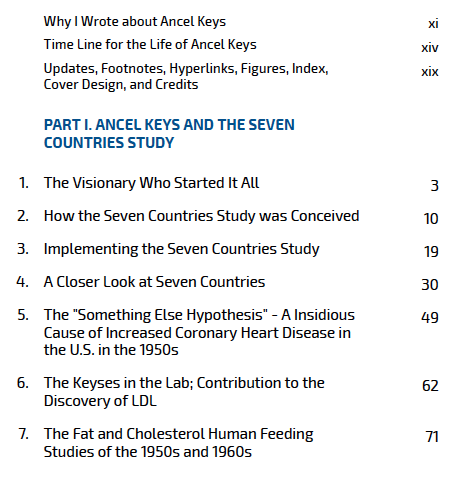
This year I have assigned a book I wrote as required reading. But I am only requiring that you read Part II. Cholesterol: What is it? One of the reasons I wrote this book was to explain what this mysterious molecule (cholesterol) is and how it is important in the body. I could have written an entire book on cholesterol, but I don’t think many people would have read it! If you get a chance, please read the whole book. It is about Ancel and Margaret Keys. I wrote the book because there are some very untrue accusations about Ancel Keys on the Internet and in some recent books. I can assure you they are totally false, and in fact, Ancel Keys was a great scientist and American.
Note: The Genius and Partnership book can be found as a pdf on the Sakai website!




A Mediterranean Meal for Summer Dinner
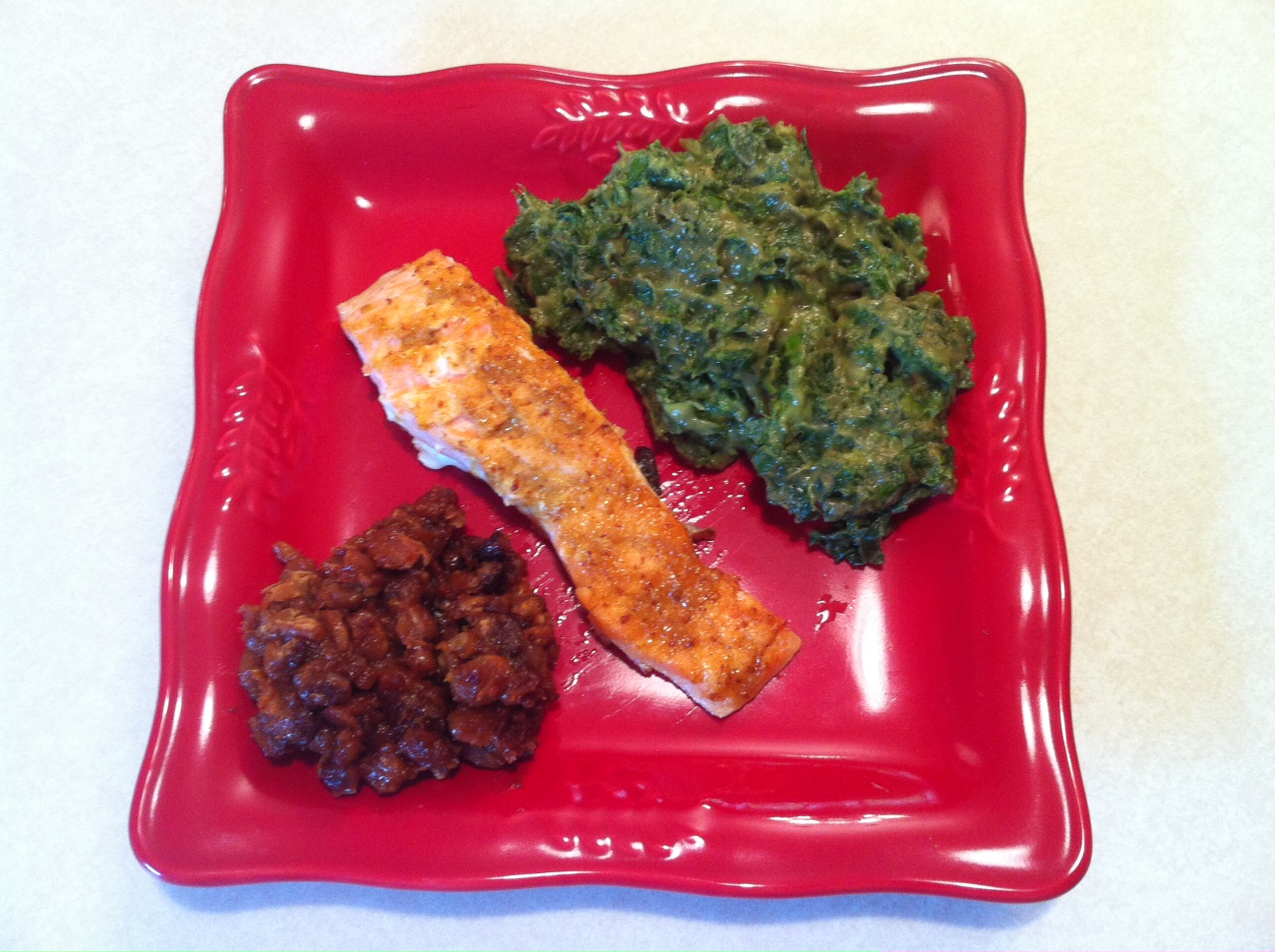
A Mediterranean Meal made of grilled salmon, kale and avocado salad, and home made baked beans.
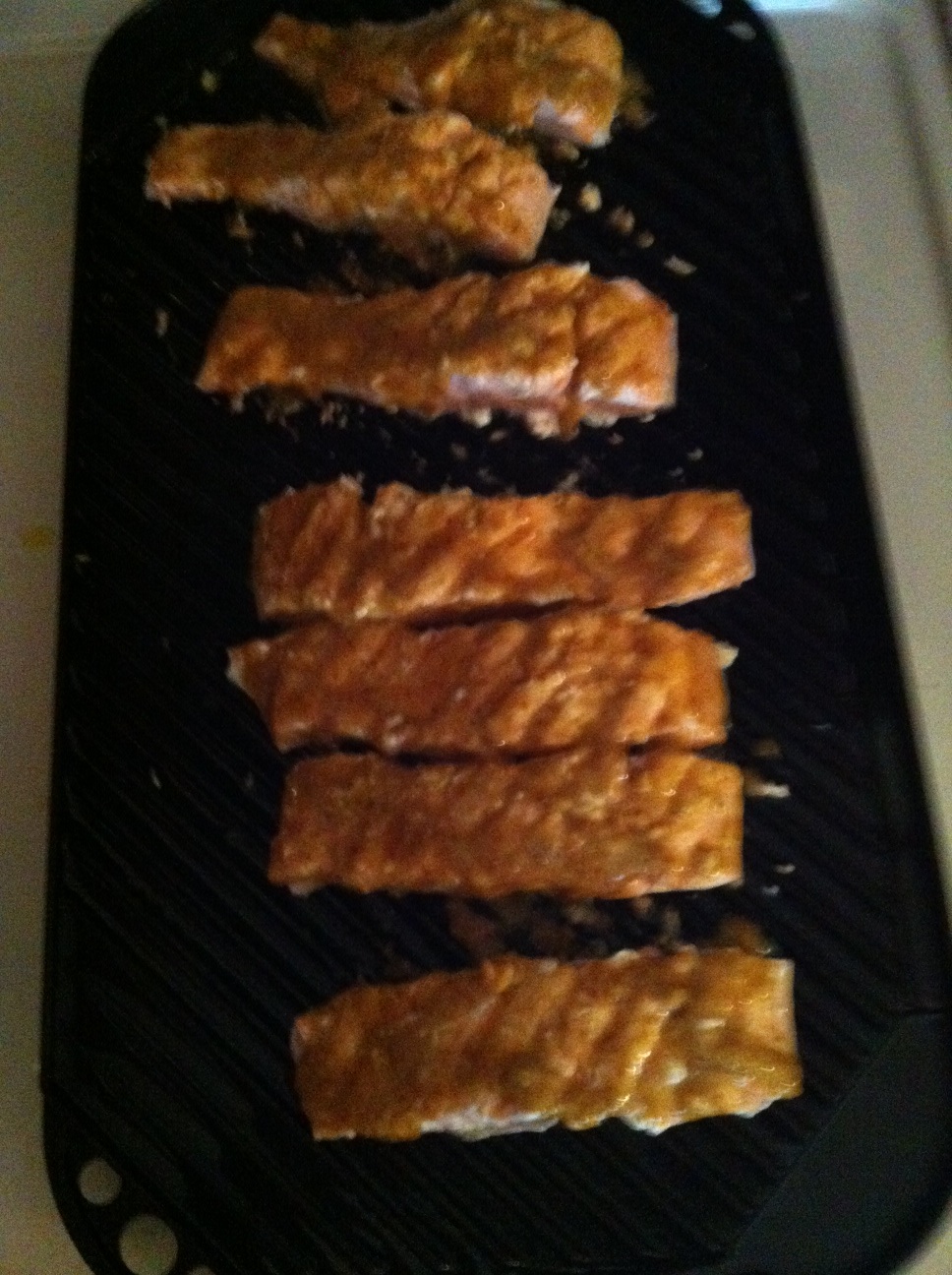
Slices of fresh ocean salmon are placed on a grill and brushed with mustard sauce. The salmon is grilled on the stove top and then using the broiler in the oven. The grilled salmon is shown below:
The kale and avocado salad are made as follows:
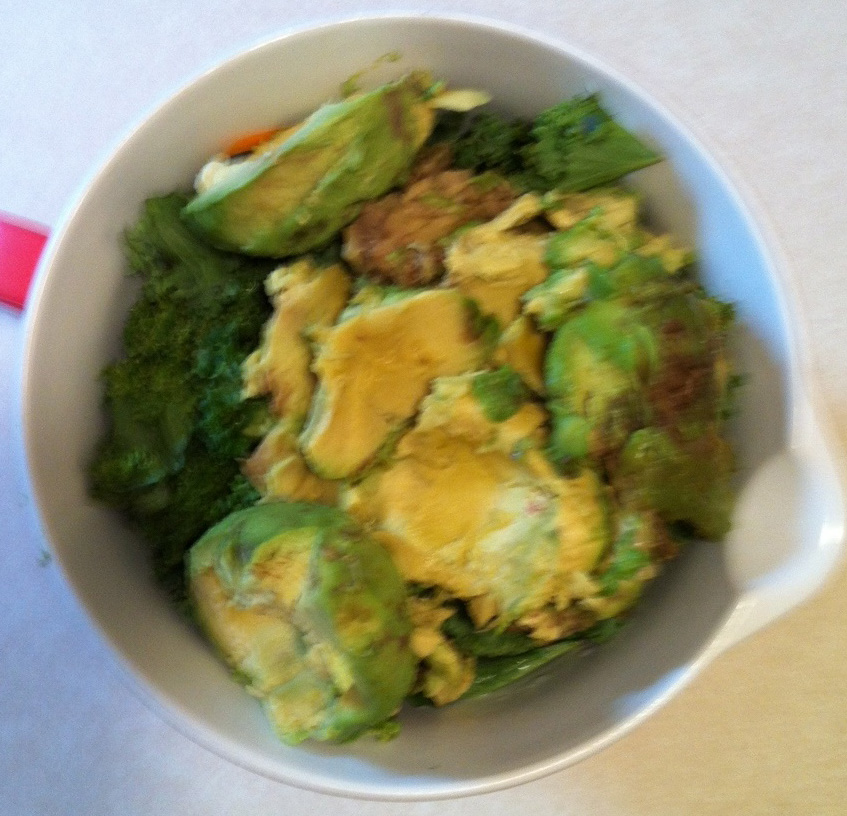
1. Wash 3/4 pounds of kale and peel 3 avocados. Have 2 large lemons and sliced tomato ready.
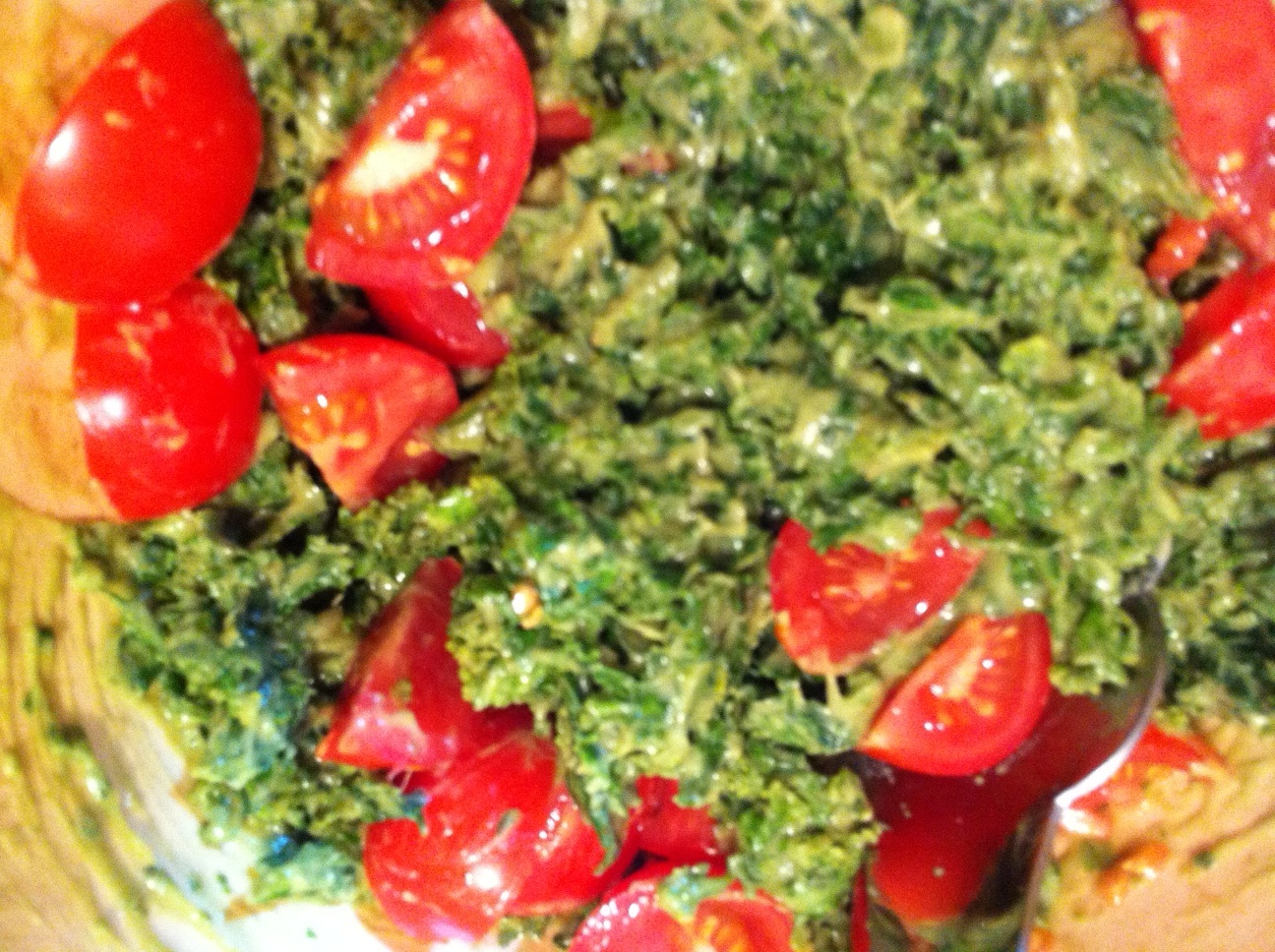
2. Place the avocado in with the kale and mash it into the kale. It is best to use gloved hands and work into the kale. Squeeze the lemons into the salad and work in some more. Finally, add some sliced tomato.


3. Put together the salmon, kale salad, and home made baked beans for this light summer Mediterranean meal:
Eat a Mediterranean Salad to Fight Obesity – June 30th
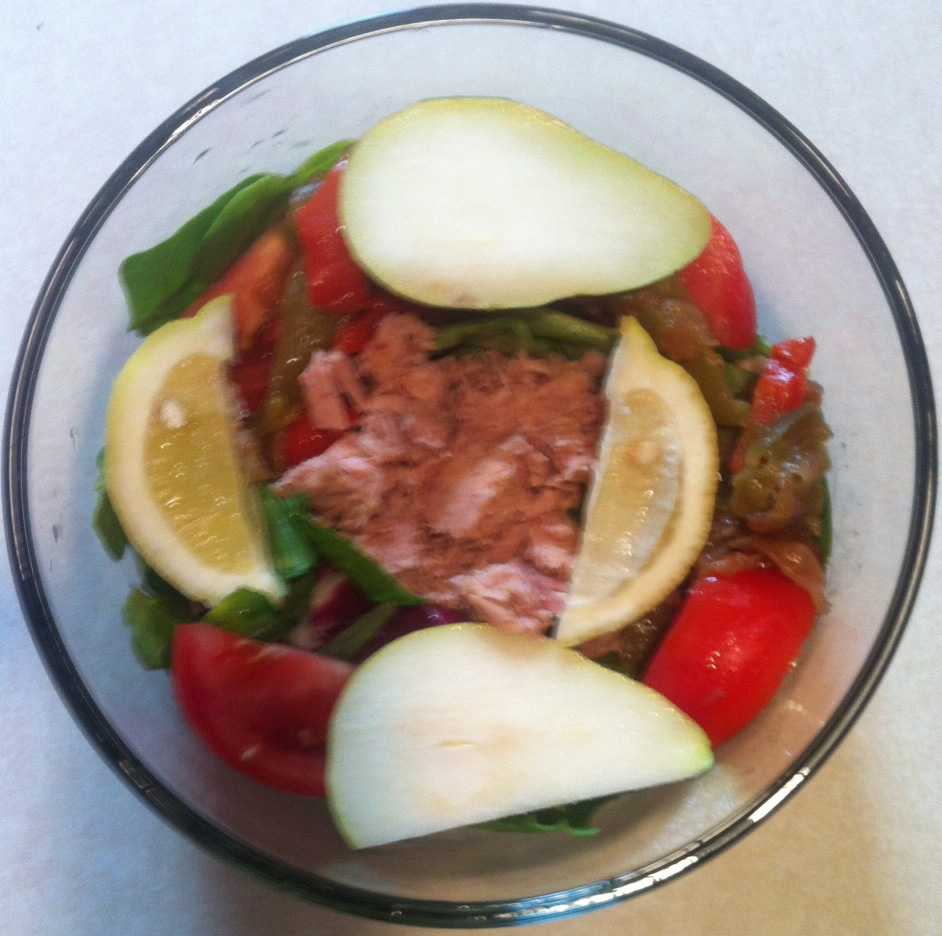
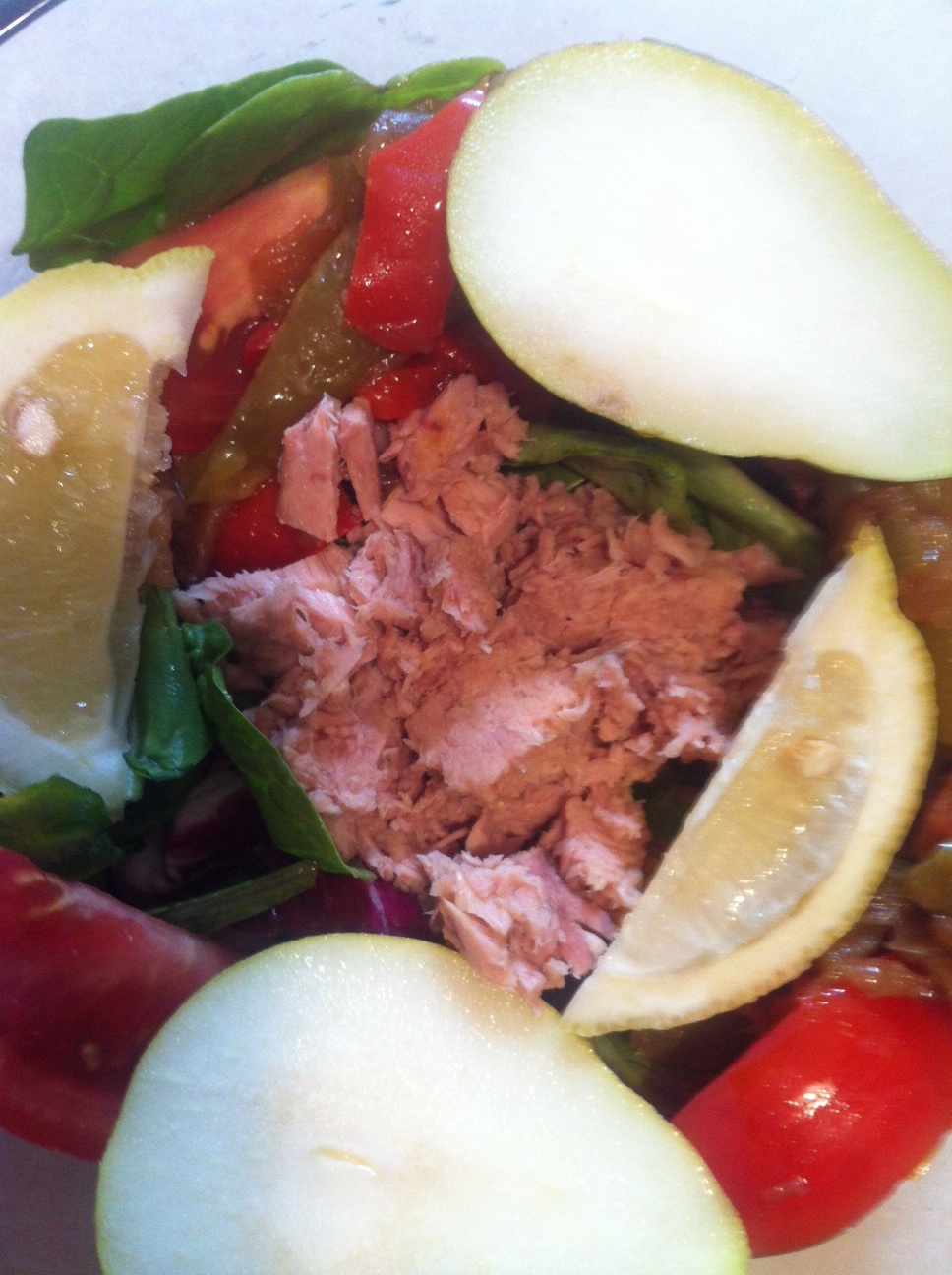
Today’s salad contained
Romaine lettuce (locally grown)
Mixed greens (spinach and lettuces)
Tomato
Green and red pepper (fried in onions and olive oil)
Pear
Today I added a half a small can of tuna and slices of lemon
Eat a Mediterranean Salad to Fight Obesity
Eating a Mediterranean salad for lunch or dinner is a fantastic way to eat healthy and fight obesity. It is packed full of nutrients including plenty of fiber to fill you up. A Mediterranean salad can also raise your spirits! In my mind, two important aspects that make it better are:
1. Using a portable glass salad bowl with a tight fitting lid. I do not enjoy eating out of a plastic bowl.
2. Use many different ingredients and change them often.
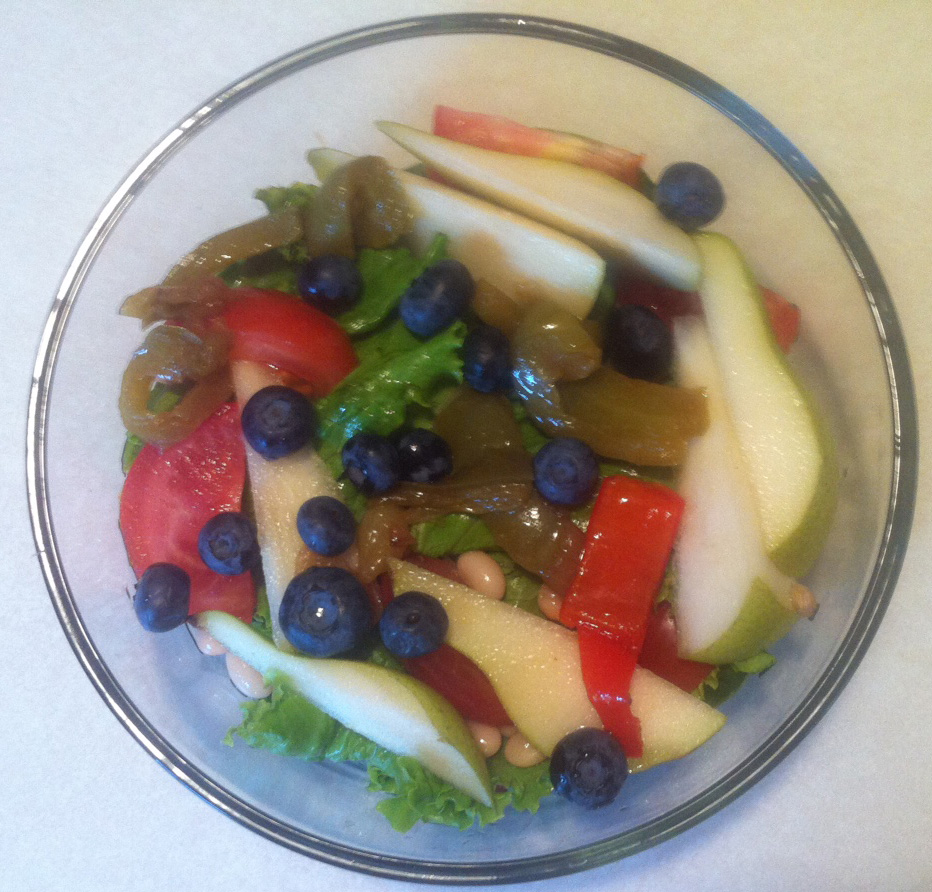
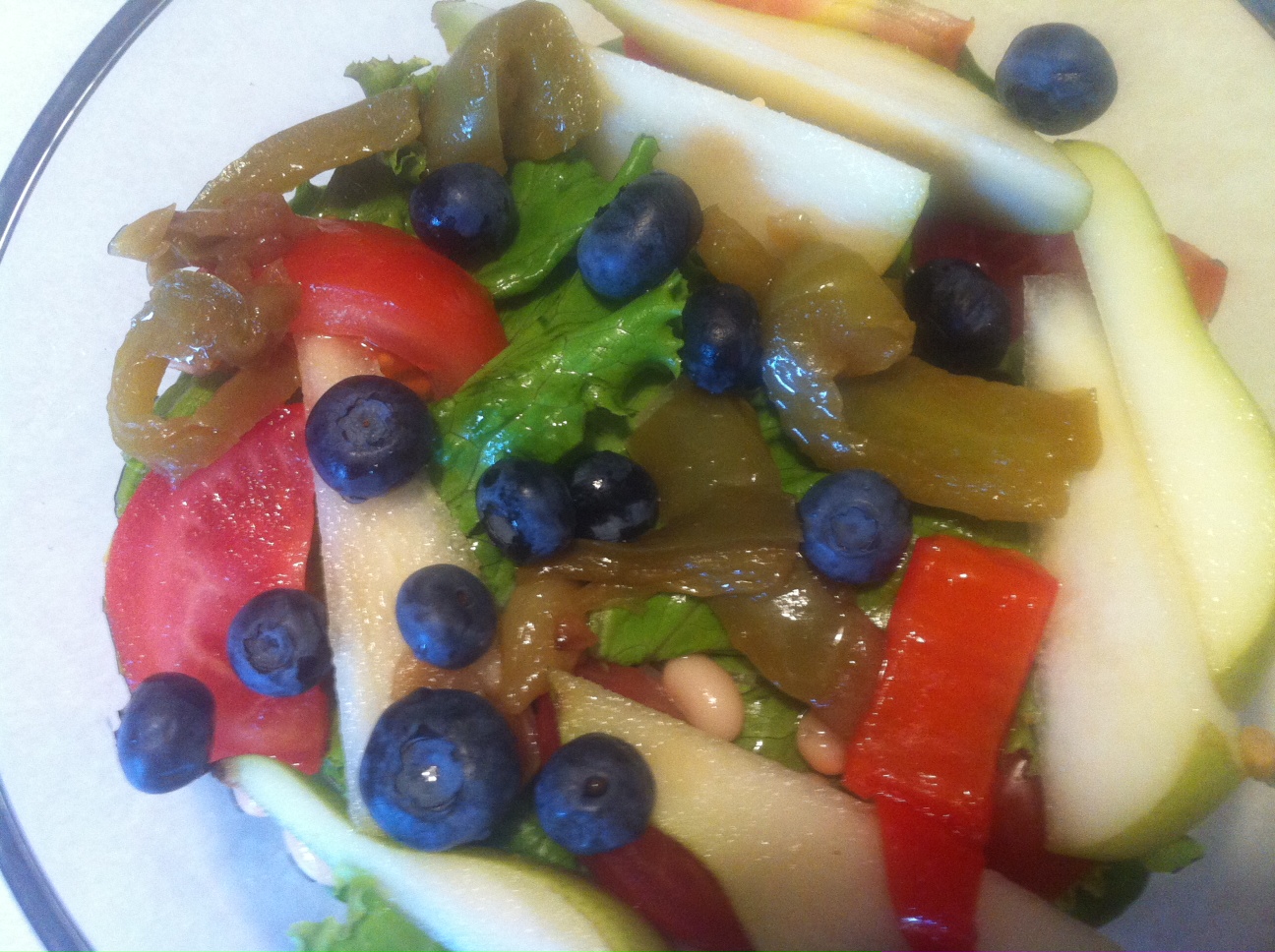
Today’s salad contained
Romaine lettuce (locally grown)
Mixed greens (spinach and lettuces)
White beans (canned)
Tomato
Green and red pepper (fried in onions and olive oil)
Pear
Blue berries
Plans for How to Cure Obesity for Summer 2015
Since this blog is basically for my courses on Nutrition and Obesity at Rutgers University, the posts become less frequent during the summer months and between semesters. However, that does not mean that I am inactive during these times. As you were able to see in my last post, I just published a book on Ancel Keys, who was an amazing scientist and also a hard working American who sought to improve the health of all Americans.
This summer (2015), I will attempt to complete another book project– that is, a book on Obesity in America.
Here is a bit of information on my new book on Obesity:
What is the current title? So far, the title is: Nutrition, Health, and Obesity: The Rise of Obesity in America and its Causes.
Why I am writing this book? There is not a good nutrition/obesity book for the general public on the market. There are many books written by so-called “media nutrition experts.” I use “Textbook of Obesity…” (See below) in my class and it is a great book and a wonderful source of references and topics, but it is a fairly dry book for the general reader.
Do I have the background to write this book? My credentials for writing this book: I have been teaching a class entitled “Nutrition and Health” for almost 25 years. I have taught this class at Columbia University in NY, at the University of Missouri, and now about 10 years at Rutgers University. Over the past few years I have also taught a class entitled, “Obesity: Biology, Behavior, and Management” (11:709:427:01). The Obesity book I am writing uses the knowledge and experience I have gained in teaching these two classes.
What is my philosophy in writing the book? I believe that if people truly understand the problem behind energy management and obesity, and if they are presented with some solid strategies for going forward with a plan of health living, then they will not turn to fad diets or crazy practices. They will pick a course of action and stick with it.
Who is the Audience for the book? I think a medium educated and highly motivated audience interested in nutrition and health (and not requiring a science background) will be the target audience.
What are my goals and aspirations for the book? I am hoping that this book will become the “Guns, Germs, and Steel” of the nutrition area.
What are Early Readers saying? I have had two Beta readers read an early version of the book last fall, and both of them loved it. One told me, “When you publish the book, I will buy a copy for each of my children and friends.”
Please watch out for posts from my book that I will publish this summer on this Site!
Publication of My Book on the Discovery of the Mediterranean Diet by Ancel and Margaret Keys
In late March 2015 I published my book on Dr. Ancel Keys, who was a pioneer researcher into the role of serum cholesterol in coronary heart disease. Dr. Keys was born in Colorado in 1904 and attended college at the University of California at Berkeley. He was awarded his Ph.D. from the same institution and then Dr. Keys performed two post-doctoral fellowships in Europe. When he returned to the U.S., he spent several years at Harvard University, less than a year at the Mayo Clinic, and then in 1938 he was recruited to the University of Minnesota, where Dr. Keys remained his entire scientific career. While he was at the Mayo Clinic, Dr. Keys met Margaret Haney, a chemist who began to work in the Keys laboratory as a technician. In 1939, Ancel and Margaret were married and began a partnership that would last 60 years. During this partnership, several very major accomplishments were completed. These included, several that have had a great impact on the American people:
1. He formulated ready-to-eat meals (called K-rations) for the American armed forces during World War II. These turned out to be a technical success and are immortalized in hundreds of
movies and books about World War II.
2. He led a major study during World War II on starvation that provided important information on how to treat starved prisoners and civilians.
3. He conceived and implemented the Seven Countries Study and identified important dietary factors that were associated with coronary heart disease.
4. He led a series of controlled dietary fat and cholesterol feeding studies in humans that resulted in the “Keys Equation,” which accurately predicted the changes in blood cholesterolconcentrations when changes were made in the composition of fats in the diet.
But the capstone of their accomplishments was the writing of three very popular
cookbooks that would help people eat healthy. These were “Eat Well and Stay Well” (1959), and an updated version, “How to Eat Well and Stay Well the Mediterranean Way” (1975). Both books were featured on the New York Times best seller list. They wrote a third book, “The Benevolent Bean,” published in 1967, and it was also successful. A collage of the covers of the three books is shown below:

The covers of the three cookbooks written by Ancel and Margaret Keys. Photograph of the collage by JL Dixon. The cover images were used by permission of Penguin Random House LLC (which Doubleday & Company, Inc. is now part of) and Farrar, Straus and Giroux, LLC (which published The Benevolent Bean in 1972).


Recent Comments