Is lower ability to burn fatty acids in muscle a contributor to adult obesity? A Lecture presented by Dr. Greg Henderson
Gregory C. Henderson, Ph.D.
Assistant Professor
Department of Exercise Science & Sport Studies
School of Art and Sciences
Rutgers University
http://www.exsci.rutgers.edu/faculty/full-time-faculty/441-gregory-henderson

Dr. Henderson’s research is focused upon effects of exercise on macronutrient metabolism in humans. Differences between men and women, and effects of aging are of central interest. Dr. Henderson’s approach is to administer non-radioactive stable isotope-labeled metabolites (tracers) followed by mass spectrometry based analyses of blood and muscle samples.
Dr. Henderson assigned two articles to be read for his lecture on February 19, 2014:
Intramuscular lipid oxidation and obesity
Joseph A. Houmard
American Journal of Physiology – Regulatory, Integrative and Comparative PhysiologyPublished 1 April 2008Vol. 294no. R1111-R1116
http://ajpregu.physiology.org/content/294/4/R1111
Impaired plasma fatty acid oxidation in extremely obese women
John P. Thyfault , Raymond M. Kraus , Robert C. Hickner , Amy W. Howell , Robert R. Wolfe , G. Lynis Dohm
American Journal of Physiology – Endocrinology and Metabolism Published 1 December 2004 Vol. 287no. E1076-E1081
http://ajpendo.physiology.org/content/287/6/E1076
John Thyfault and his research team tested the hypothesis that muscle is less able to oxidize fatty acids in obese women. The study design was that fatty acid oxidation was measured in lean control women (BMI = 23), and this was compared to fatty acid oxidation in obese subjects (BMI = 41). Another group studied was comprised of obese women who had undergone postgastric bypass surgery and had lost weight (> 45 kg), and their weight was stable at least a year after the surgery (BMI = 34). All of the women were given fatty acid tracers in order to measure fatty acid oxidation in both resting and exercise conditions. The results were astounding. Obese women had about 25- 33% lower oxidation of fatty acids compared to controls, at rest and during exercise. Moreover, the women who had lost weight still presented with reduced rates of fatty oxidation compared to the controls. In fact, their fatty acid oxidation was very similar to the obese women who had not lost any weight.
This study demonstrates that obesity is associated with a lowering of the capacity to oxidize fatty acids, primarily in skeletal muscle. The main question raised by this article is, did the defect in fatty acid oxidation in obesity come first, and then the subjects became obese? Or did the defect in fatty acid oxidation occur only after the onset of obesity? This question is extremely difficult to answer, but Dr. Henderson felt that the lower fatty acid oxidation in obesity developed second, after obesity already was achieved.
What are the main take home points from this research?
1. No matter which came first, obese women have lower rates of fatty acid oxidation than their lean counterparts, and this would make it more difficult for obese patients to lose weight with exercise.
2. Therefore, it is especially important not to become obese in the first place, because once it occurs, the lowering of fatty acid oxidation in muscle makes it that much more difficult to lose weight. The diagram below illustrates this.

The above articles and some of Dr. Henderson’s own research will be discussed during the lecture.
Compared with that of MUFA, a high dietary intake of n-3 PUFA does not reduce the degree of pathology in mdx mice.
Henderson GC, Evans NP, Grange RW, Tuazon MA.
Br J Nutr. 2014 Feb 13:1-10.
Determinants of resting lipid oxidation in response to a prior bout of endurance exercise. Henderson GC, Alderman BL.
J Appl Physiol (1985). 2014 Jan;116(1):95-103. doi: 10.1152/japplphysiol.00956.2013. Epub 2013 Nov 14.
Kinetic measurement techniques in the evaluation of lipid metabolism. Henderson GC.
Curr Drug Discov Technol. 2013 Sep;10(3):209-23. Review
StearoylCoA desaturase-5: a novel regulator of neuronal cell proliferation and differentiation. Sinner DI, Kim GJ, Henderson GC, Igal RA.
PLoS One. 2012;7(6):e39787. doi: 10.1371/journal.pone.0039787. Epub 2012 Jun 22.
http://www.plosone.org/article/info%3Adoi%2F10.1371%2Fjournal.pone.0039787
Exercise and Obesity: The Right Kind of Exercise is Important – Dr. James Levine and NEAT
In my nutrition and health class, students always ask about the role of structured exercise (done in a gym or at home on a treadmill, etc.) in treating obesity. I let them figure it out for themselves. I give them an assignment where they calculate their daily energy expenditure and I have them list their favorite activities/exercise and list the kilocalories (kcal) expended per hour during each activity. Then I have the students list their favorite snacks with the kcal each one has. The reaction to this assignment has been consistent every year for the past ten years: “I can’t believe how long I need to exercise to burn off the kcal in my favorite snack!” It is just too easy in today’s environment to eat excess kcal! The take home message from this assignment is that structured exercise is not a way to treat or prevent obesity, unless you have enormous amounts of time to spend in the gym (say 3-4 hours per day). I haven’t met anybody with that kind of time yet!
What I teach in my class is that structured exercise is important and necessary to: 1) keep coronary artery smooth muscle cells healthy so that they can dilate when your heart is called upon to pump extra blood; 2) keep ligaments and connective tissue strong and flexible so that you do not have injuries; 3) put stress on your bones to keep them dense and strong, and 4) keep skeletal muscles from dissolving away with age.
But exercise is very important in helping us maintain a healthy body weight. Dr. James A. Levine of the Mayo Clinic has spent a good part of his career researching and promoting the role of Non-Exercise Activity Thermogenesis (NEAT) in influencing a person’s body weight.
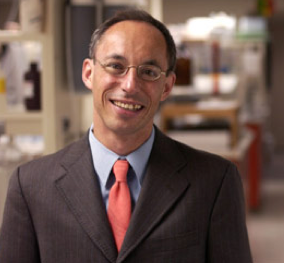
Dr. James A. Levine, Mayo Clinic
What is NEAT? NEAT is the energy we expend each day in every day activities such as walking, standing, cleaning the house, taking public transportation to work, walking the dog, standing instead of sitting, taking the stairs, and playing with the kids. Dr. Levine has used state of the art measuring devices in studies of people’s everyday activities, and he has determined that people who are able to maintain a healthy body weight expend approximately 2 hours more NEAT per day than people who have difficultly maintaining their weight. Why is NEAT more helpful in maintaining weight than structured exercise? Because we do NEAT more often! Most people who perform structured exercise regularly only do so about 4 hours per week. People who perform greater than average NEAT do so every day/7 days a week! On average, a person who expends a large amount of kcal in everyday activities will burn 500 more kcal per day than a person with a similar body type who does little NEAT per day. The reason for our lower levels of NEAT today are due to many reasons- jobs where we sit all day, no need to hand wash the clothes and hang them out to dry, driving to the supermarket instead of walking or having to hitch the horse to the buggy. The reasons are numerous because of all the work saving devices that have been introduced into modern day society.
Dr. James Levine is absolutely correct in his research and his scientifically based observations on the role of NEAT (i.e., the lack of it) in the obesity epidemic in the US. See his article through the link below!
How do we increase NEAT in our everyday lives?
It’s easy but hard. The first thing is to throw out the television set. There is nothing that causes you to sit and not move more than watching television. If you do not wish to part with your TV, then thrown out the couch and replace it with a treadmill. However, most people do not use their treadmill no matter what! Another way to increase NEAT is to walk to work and/or use public transportation. This will provide 30 to 90 min per day of exercise depending upon your commute circumstances. If it is impossible to commute from where you live – move! Another way to increase NEAT is to get a job where you need to walk around. Again, you need to be committed to getting that NEAT! If you do not want to change jobs, consider installing a treadmill desk in your office. In fact, there are directions on how to build your own treadmill desk on the Internet! And you can get exercise in the building process! There are numerous ways to increase NEAT in your life!
What about structured exercise? Is that important?
Yes, it is amazingly important because you still need the health benefits that I wrote about earlier in this post. Most important, you need to perform 4 hours of strenuous exercise per week to keep your heart muscles and coronary smooth muscle cells in good shape! Please see a few of the many publications by Dr. James Levine by clicking on the links below:
http://bjsm.bmj.com/content/41/9/558.long#global-tab-quality
What is Fat? Lecture Based on the Work of Dr. Susan Fried
Susan K. Fried, Ph.D.
Professor
Department of Medicine, Boston University Medical School
Director, Boston Nutrition and Obesity Research Center (BNORC) (bnorc.org)
http://www.bumc.bu.edu/medicine/faculty/fried/

Dr. Susan Fried is one of the top experts in the study of adipose, the tissue that stores fat in specialized cells call adipocytes. For class on February 5 we reviewed two of Dr. Fried’s recent review articles on adipose tissue:
Karastergiou K, Smith SR, Greenberg AS, Fried SK. Sex differences in human adipose tissues – the biology of pear shape. Biol Sex Differ. 2012 May 31;3(1):13. doi: 10.1186/2042-6410-3-13. PubMed PMID: 22651247
http://www.bsd-journal.com/content/3/1/13
Lee MJ, Wu Y, Fried SK.
Adipose tissue heterogeneity: implication of depot differences in adipose tissue for obesity complications.
Mol Aspects Med. 2013 Feb;34(1):1-11. doi: 10.1016/j.mam.2012.10.001. Epub 2012 Oct 13. Review.
http://www.sciencedirect.com/science/article/pii/S009829971200115X
People who are obese have an excess of adipose tissue, or in lay terms, too much fat.. On one hand, having excess fat is like having extra gasoline on board, and therefore, one doesn’t have to worry about running out of fuel. On the other hand, most people in our society would prefer to be thin, and too much fat predisposes people to health problems and diseases such as Type 2 diabetes and cardiovascular disease.
What is Fat?
Fat cells called adipocytes (See below) store fatty acids in the form of triacylglycerol molecules (also known as TAG), which have 3 fatty acids attached to a 3-carbon glycerol molecule. This is a safe and non-toxic way to store fatty acids, which are long hydrocarbons that are fairly similar to the hydrocarbons in gasoline.
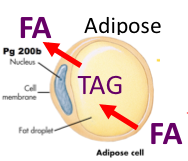
Below is a figure that relates how much energy is stored in the body and in which form it is stored in. You can see that adipose contains most of the stored energy in the body.
From Dr. J.A. Illingworth, University of Leeds
Researchers who study fat and lipid metabolism are very interested in learning how fatty acids enter adipocytes in order to be stored as triacylglycerol molecules (fat). Likewise, researchers are interested in how fatty acids are released by adipocytes so that the fatty acids can be used by tissues such as the heart for energy. Most people would like to see some of their fat tissue disappear- especially fat that we consider in the wrong place. It turns out that fat tissues vary in the body and that the distribution of fat is vastly different between men and women. As shown in the figure below, the different distributions contribute to both body shape and to differences in the metabolism of stored fat. We will discuss these issues during class.
New Study Supports Case that Obesity Begins in Early Childhood
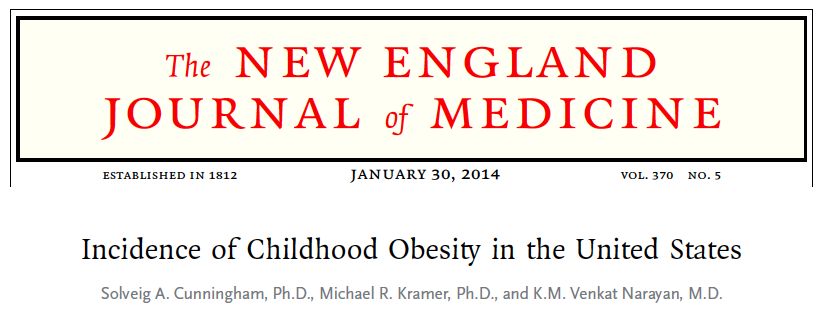
A study published in the New England Journal of Medicine (370: 403-311, 2014; January 30, 2014) supports the notion that the development of an overweight condition and/or obesity in early childhood are important causes of the increase in obesity rates in the US. In this study, 7738 children who were in kindergarten during the 1998–1999 school year were studied in a prospective longitudinal study of the incidence of obesity among children.
Points that were most striking in the study were:
1. The prevalence of obesity in children in kindergarten of 12% was remarkable; then by 5th grade the remaining increase in obesity to 22% was also quite eye opening.
2. The socioeconomic effects were extremely strong and undeniable. Children in the top quintile of socio-economic status had about half the prevalence of obesity at each age studied.
3. Birth weight above 8.8 pounds was a very strong predictor of obesity.
Not having looked closely at obesity statistics in early childhood before, my interpretations of these data are:
a. Obesity is occurring very early in life and any attempt to lower it must target women before pregnancy and the first 5 years of early childhood.
b. The most important way to combat obesity would be nutrition education for women before they become pregnant. My obesity class students made the point that women do not obtain enough education about nutrition and how it impacts their babies.
c. The early child years are crucial and more studies are needed in the early time frame.
d. The socioeconomic data of the current study merges with the views put forth by the documentary, “A place at the table,” directed by Kristi Jacobson and Lori Silverbush. The movie shows that people in the low-income strata often eat foods, mostly because they are relatively inexpensive, that are calorie dense and are relatively low in nutrients.
Professor John Worobey’s Lecture on Childhood Obesity

Professor John Worobey of Rutgers University provided two background articles for his lecture on obesity in children:
1) “A narrative literature review of the development of obesity in infancy and childhood,” by Sally Robinson, Katie Yardy and Victoria Carter. J Child Health Care 2012 16: 339.
2) “Do not eat the red food!: Prohibition of snacks leads to their relatively higher consumption in children,” by Esther Jansen, Sandra Mulkens, Anita Jansen. Appetite 49 (2007) 572–577.
It has been suggested for the last 2 decades that obesity in children is largely the result of poverty and income inequality, but the data was not strong until the last few years when the rates of both poverty and obesity increased to high rates. These changes allowed the statistical analysis to show that they are linked in a significantly way. The Robinson article is a review of studies and describes the factors that are associated with increased obesity in children. Some of these factors are “no brainers,” but other are a little surprising. Later on in the semester, Dr. Yanhong Jin will lecture on the role of the Built Environment in obesity, and you will be surprised at how our our physical environment influences childhood obesity.
The second article by Jansen and co-workers describes original research that demonstrates that restricting food in children can often have the opposite effect, in that the children then seem to crave the food that was previously restricted. These experiments are easily influenced by experimental design, but the basic take home message from the Jansen article is that it is not a good idea for parents to go to the opposite extreme and restrict food in a blatant way or put high pressure on children to eat in a particular way.
Dr. Worobey’s lecture will cover the wide area childhood nutrition. His recent publications are:
Worobey, J. (2013). Preventing infant obesity – It’s never too soon to start (Editorial). Journal of Food & Nutritional Disorders, 2. http://dx.doi.org/10.4172/2324-9323.1000e109
Worobey, J., Fonseca, D.M., Espinosa, C., Healy, S., & Gaugler, R. (2013). Child outdoor physical activity is reduced by prevalence of the Asian Tiger Mosquito, Aedes albopictus. Journal of the American Mosquito Control Association, 29(1), 78-80. http://www.bioone.org/doi/pdf/10.2987/12-6296R.1
Worobey, J., Borrelli, A., Espinosa, C., & Worobey, H.S. (2013). Feeding practices of mothers from varied income and racial/ethnic groups. Early Child Development and Care http://www.tandfonline.com/doi/full/10.1080/03004430.2012.752735
The Seeds of Obesity are Sown in Young Children
One reason the obesity epidemic is a complex problem is that it has different causes at different stages of life, but a major root cause starts at a young age:
For young children – It is so easy for parents and caregivers to allow children to watch TV or play computer games rather than to take them out to the local park for play, exercise, and fresh air.
For older children – They learned that it was OK to sit for long periods of time at the computer, and therefore, they stay inside rather than venture outside to be with friends. Also, because both parents need to work, older children are unable to help prepare the family meal, such as wash the green beans or mash the potatoes. Therefore, they do not learn how to cook basic, nutritious foods.
For college students and young adults – When living on their own for the first time, they still lack basic cooking skills, and they never learned the essentials of good nutrition, either in school or from helping Mom or Dad to cook at home.
For those starting careers – Working long hours allows little time for shopping at supermarkets and preparing nutritious meals at home after work. Therefore, it is much easier to purchase convenience foods from the corner store or stop at a fast food restaurant.
“How to Fix the Obesity Crisis” by David H. Freedman
David Freedman wrote the above article that was published in Scientific American, 304: 40-47, 2011 (February issue). The first part is quoted below, but you can find the entire article on the class Sakai site. Please read it for class on January 29, 2014. You can make comments on the article here!
“Modern epidemic: For millennia, not getting enough food was a widespread problem. Nowadays obesity is a global burden that affects one third of Americans. Another third are overweight.
Obesity is complex: Researchers have developed key insights into its metabolic, genetic and neurological causes. But this work has not amounted to a solution to the public health crisis.
Behavior focus: Using techniques that have proved effective in treating autism, stuttering and alcoholism may be the most valuable for either losing weight or preventing weight gain.
Next steps: Behavior studies show that recording calories, exercise and weight; adopting modest goals; and joining a support group increase the chances of success.”
What I especially liked about this article is that the author discussed obesity on the level of the individual and discussed obesity across the population. They are two vastly different situations and he does an excellent jobs on both levels.
Please go to Scientific American or the Sakai Website to read the whole article.
First Post – Reason for this Blog
Obesity: Biology, Behavior, and Management – spring 2014- Wednesdays 9:15 am – 12:15 pm
Location: 206 Thompson Hall, Cook campus
Course Director: Joseph L. Dixon, Ph.D., 132 Thompson Hall
Background:
The study of obesity provides an excellent opportunity to examine a complex problem from a multidisciplinary perspective. In fact, I believe the greatest surprise from this course is that you will find that high rates of obesity in the US have many complicated causes; most of which are not directly related to biology. This course will enable students to see the connections between numerous disciplines and fields, all of which impact the same outcome, obesity. The course will provide a series of state-of-the-art lectures by scientists actively involved in different aspects of research relevant to obesity. These lecture/discussion sessions will enable the students to understand the multi-factorial etiology of the epidemic, as well as the treatment and public policy approaches that are being used in the obesity research community to combat the disease.

 How to cure obesity
Recent Comments