Class 3 – Nutrition and Health – Fall 2019 – Chapter 2 of McGuire and Beerman


Using Eatracker.ca to do your Diet Assignment


Class 2 – Nutrition and Health – Fall 2019 – Chapter 1 of McGuire and Beerman

Note about Order of Topics:
I follow the book very closely throughout the semester. The first two chapters of the book are fairly light and concern general information about Nutrition and how the Dietary Standards (Dietary Reference Intakes (DRIs)) were created and why. I add some information about the Foundations of Nutrition, which were developed in the late 1800s and early 1900s. Much excellent Nutrition research was done during these periods of time. One of the problems the “Media Nutrition Experts” have is that they do not know about the early research and thus have missed the most important fundamental findings in Nutritional Sciences. I have selected what I call the Three Foundations of Nutrition. These topics or breakthroughs were not the only research performed by the early researchers, but I consider them the most important. Without these three foundations, the rest of nutrition research would have been difficult to complete.
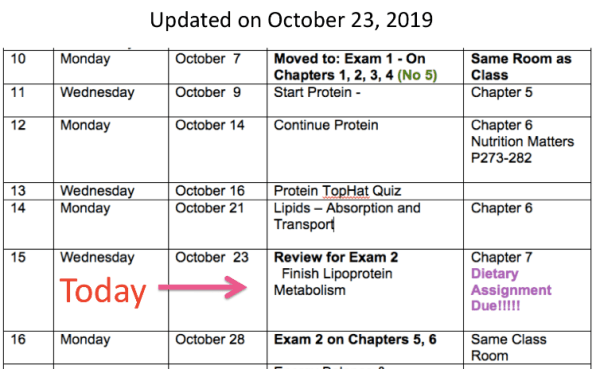
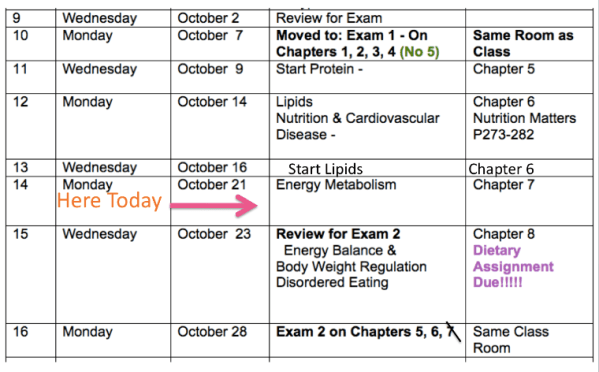
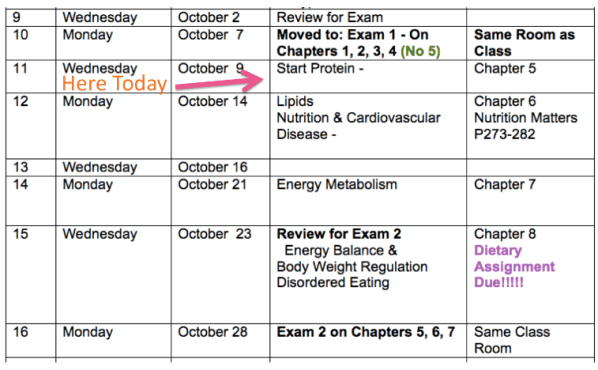
On the following Synopsis of the course, I highlight what portion we are doing right now and where we will head next.

Class Survey Conducted the First Day of Class – It is important for me and you to know who is in the class. On one hand it, is a challenge to teach such a diverse class. On the other hand, it is fun and I enjoy the diverse backgrounds of everyone in class.


Class 1 – Nutrition and Health – Fall 2019 – Welcome to Class
Welcome to the Class:
I wanted to say I am looking forward to class this semester. Last semester I added TopHat to the class so as to get immediate feedback and to better track attendance. The response was amazing – every student I talked to liked using TopHat. In order to makeup for some of the extra money you need to spend on TopHat, I went back to using primarily the solid Textbook, which you can probably get used for a very small amount. There must be hundreds on campus somewhere. You can still order the on-line version of the book if you prefer that. In order not to need the online version of the book, I found a free diet analysis program that is extremely easy to use and can be done from your phone. So we will no longer use the Textbook diet analysis program.
I have a blog for the course that can be accessed directly or through TopHat. The name is: https://howtocureobesity.com
On the blog I put the outline for the day’s lecture and some interesting tidbits I find here and there. If someone asks me a good question (which almost all are), I will answer it on the blog.
And finally, I use Sakai for resources, announcements, and for its gradebook.
Looking forward to a fun and productive class!
Joe Dixon

Class 28 – Nutrition and Health – The Last Class (Waltz) – Trace Elements – Vitamin Supplements and Odds and Ends


Notice the Difference between Ultra-processed and Unprocessed Foods:


Class 26 – Nutrition and Health – Chapters 12 and 13 – Major and Minor Minerals

New Paper in Press from Kevin Hall of the NIH


Class 25 – Questions for Exam 3 from the Review Sheet
Remember – Tuesday is Exam 3! You do not need to know the Metabolism chapter for this exam! Just Energy Balance, Water Soluble Vitamins, and Fat Soluble Vitamins
Here are some questions from the Review Sheet from a student:
1. Who were the de Klerk family in South Africa?
ANS: This was a story I told in class. de Klerk was the President of South Africa before Nelson Mandela and his family has been in South Africa since the early Dutch colonies. Anyway, the first two women who traveled to be wives died onboard the sailing ship because of scurvy. The third made it and was the matriarch of the de Klerk family. This story just showed how vitamin C played a part in many circumstances in history.
2. Why do women have more carrying capacity for vitamin A?
ANS: In order to have a supply when they become pregnant, I suppose.
3. Where in the world does vitamin A deficiency occur and what is their main staple food?
ANS: In countries that rely on white rice as a staple and when green vegetables are lacking
4. Where else is vitamin K made and by what?
ANS: Vitamin K is made in the human intestine by bacteria
5. How do northerners adapt to low sunlight for vitamin D?
ANS: Overtime, their skin became lighter
6. Who is Harry Steenbock and what disease did he eradicate?
ANS: He discovered that you could fortify milk with UV light – therefore, he helped eradicate Rickets. You can Google him!
7. How would someone become insensitive to vitamin D?
ANS: If they had liver or kidney disease and couldn’t make the active form of vitamin D in their body. Therefore, they would need to be given di-hydroxy Vitamin D directly.This is now possible.


Recent Comments